

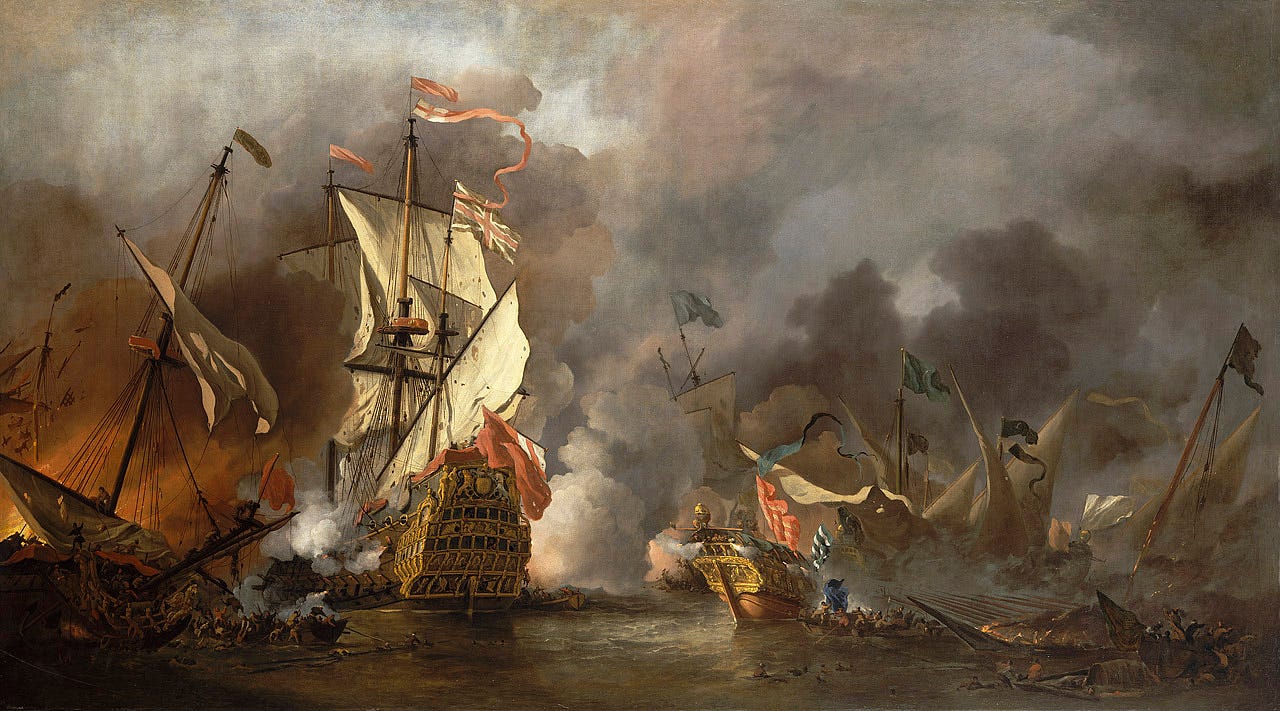
A strait is a line of water between two shores. This is its nature, and in it lies the whole secret of its politics. A fleet can cross a passage, and can even watch it for a time, but it cannot hold it: sooner or later it must coal, repair and anchor somewhere. To control a strait in a stable and permanent way one must possess its shores, command a base on the nearby land, and very often dominate its hinterland. The control of a maritime passage, in other words, is not merely a naval undertaking; it is a territorial one. This is why the British Empire, which rested upon the control of the world’s great straits, was driven to occupy, one after another, the lands that surrounded them. The empire of the passages was, of necessity, an empire of the shores.
The sources on British sea power document this mechanism plainly, and it is worth reading them closely. Paul Kennedy enumerates the overseas acquisitions precisely according to the passages each one guarded; John Darwin classifies the imperial possessions by their strategic function, distinguishing “naval and military fortresses (like Gibraltar and Malta)” from “’occupations’ (like Egypt and Cyprus).”[1] What follows examines, case by case, how London took and held the territory around each strait, and shows that the logic was everywhere the same: to keep a passage open — or to be able to close it — one first had to seize its banks.